
From the CAA: In Conversation with David Weinstein
CAA archivists recently talked with David Weinstein, an archivist, composer, radio host, and co-founder of the New York-based art’s collective Roulette. In this conversation, Weinstein shared with us a bit about his history with Roulette, his approach to archival work, and his activation of archival materials through radio programming.
The CAA’s recent work in conversation with archivists and creative musicians is funded in part by the Gaylord and Dorothy Donnelley Foundation.
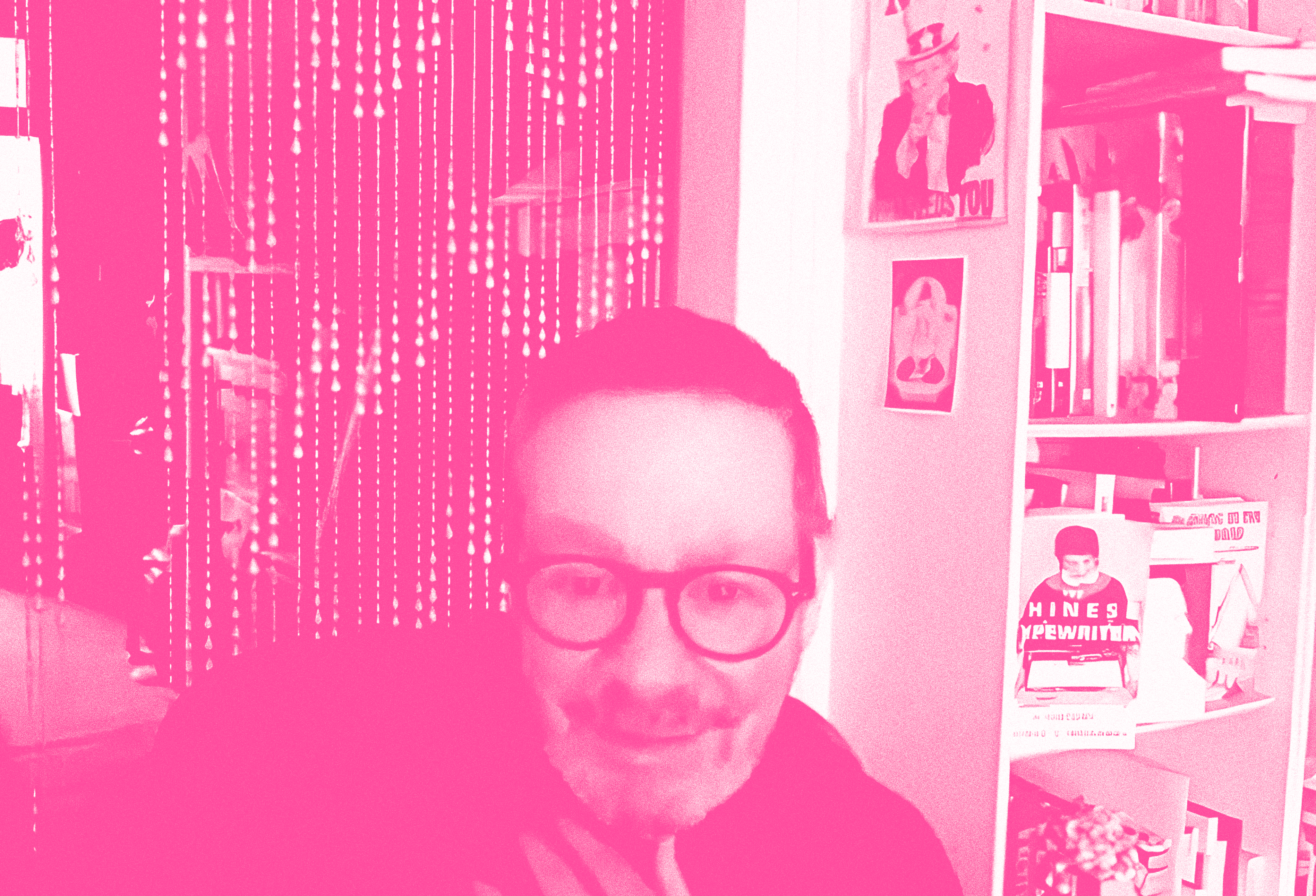
Interview with David Weinstein
ESS Guiding Question #1:
Could you share a little bit about your history at Roulette and what keeps you most occupied these days?.
If I tell you the whole story, we’ll be here for two hours, so I’ll give you a little background. Roulette was founded in 1978, and at the time, the idea was to create a composers collective of a bunch of us that graduated from the University of Illinois and spread across the country. One person went to Minneapolis, Jim Staley went to New York, I went to Chicago with my partner Lori Sheavska, who was part of the original Roulette crew, and then another person went to Portland. So it started like that, and from the very beginning the other cities sort of dropped out of the picture. I moved to New York, and we started the concert series, which became popular even though it was started as a collective of just a small group of postgraduate composers and musicians and designers. Anyway, we started the concerts, and they were very popular. We had a piano and a sound system, and we were an alternative to places like The Kitchen and, at that time, a very Manhattan-centric established arts and music community. So people asked us if they could play there, and we decided to start doing the concert series, so that took off. In that small, fringe-culture way, it took off in Manhattan. It was a hot time for new music downtown. The improv scene was forming, but for us from the very beginning, we were very serious about making good recordings, good documentation of the performances.
We were not good at documenting the visual component of any of this stuff, and that lasted all the way until they moved to Brooklyn in 2010/11. So there’s very little video, there’s very few photographs. There’s some, but it’s not like we just documented everything all the time. We were just very serious about the sound. And so you leap forward, all of us did engineering, graphics, wrote press releases, performed, took the money at the door. We did everything as a group, sharing responsibilities. And then I left in the mid ‘90s and started working for other places. And one of them was the PS1 Contemporary Art Center, which is now known as MoMA PS1, and they put me in charge of their radio station, which has since been discontinued. When MoMA took over PS1, they jettisoned the radio station, and we restarted it as an independent, separate from the Museum of Modern Art. But during my time there I started to do not archiving so much as restoration of tapes. And there were a couple of people that were involved in the station that had reel-to-reel tapes and other cassettes and other things that people wanted to use to make radio programs, and so I helped with those, and that got me started on this idea of preservation, and then ultimately archiving. Then the whole PS1 radio station project ended for various reasons, primarily real estate and funding and staffing and stuff like that, and also the Museum of Modern Art had dropped out, and we were at the whims of the city of New York, who was our landlord. Anyway, I left, and at that point Roulette had just started establishing itself in the Brooklyn space, which is a 400 seat theater, and they were scrambling to find a new administration. Some people had quit or moved on or retired or were fired, and so I offered to help run Roulette in Brooklyn, but I said I’ll just do this for a couple of months while you do a head hunt for a really good person to be your managing director. Jim Staley was still the executive director, and he was my original partner from the beginning. So, while I was there doing basically administrative work, I went down into the basement and found that Jim Staley had preserved all of these tapes from the beginning of Roulette, which was hundreds of reel to reel tapes and thousands of digital recordings on various media – DAT tapes and PCM digital on video, what looks like VHS tapes.
And there was audio on mini DV and high eight, and all of the legacy gear that you needed to play these tapes was also preserved down there in the basement. So I looked at these tapes, and I thought, you know, some of these are 30 years old or longer, I wonder if they still play. So, just by myself, just picking out some of my favorites by memory, like ‘I remember this was a cool concert,’ I started teaching myself with that old equipment to digitize these recordings. And this job that I took at Roulette, where I thought I would stay for three months, wound up being two years that I was sort of the administrative director, interim managing director. And in those two years I digitized about 200 tapes, which I thought made me a genius and a hero. What we did with that 200 was we got some grants to hire assistants for me, and then in the next three or four years we did 2000 tapes with the assistance of people who would come in every day and just digitize. So parallel to this, you know, I’m not a trained archivist. I didn’t have any institutional training. I’m not certified to be an archivist in any way, but I was a curious person, and I started reading things, and I started having meetings with people who did archiving, and it was like the New York Public Library, the New York Philharmonic, and New York University collection and just some other people that I knew that were in programs or were in training to learn what was the proper way to do this. And so I learned that I should create a very exhaustive database, and I learned about the standards for what the transfer resolution should be for various media and stuff like that. I read, or I tried to read, or I looked at something called the Dublin Core, which is this ridiculous document created in the mid ’90s that gives you… they brought all the world’s greatest archivists together at the dawn of the digital age, and they boiled it down to 16 things that have to be attached to every artifact. So it’s like date, title, dimension, engineer, original equipment that was used to do the documentation, aspect ratio…16 things that you need to carry forward the provenance of anything. So they worked on photographs and film, but also audio. So I studied all this stuff, and just kept plugging away at trying to catch up with these thousands of tapes. The technology that we used, the digitizing equipment, that changed and got upgraded. We were saving multi track and stereo mixes onto CD ROMs, and then DVDs, and then Blu-ray discs, and now everything is saved on like a 40 terabyte hard drive somewhere. So that was a big growth in process, and so, about a year and a half ago I caught up. We got to the point where we had digitized everything that was in the preservation archive, and now I’m working to preserve the concerts from literally yesterday or last week, and that’s multi-track stereo mixes. The engineers’ notes are all saved, and we share these with the artists when they want them.
So, the other side of the story is that because I had started working in radio for PS1, I had some radio experience, and I started to get offers from the Wave Farm, WGXC broadcast radio, literally terrestrial radio broadcast project. These were people that started as a pirate radio station in Williamsburg as free 103.9 and then eventually they moved the project to upstate New York near Hudson, and it became Wave Farm, and the radio station WGXC. They offered me to do a monthly show, which I proposed to them to be based on the archives. And then the other big one was WFMU Radio, which was founded in like 1959 and is one of the world’s greatest free form radio stations, and completely listener supported. They offered me a weekly radio slot, where I mix roulette archival material with current releases, and for a while I was running around town recording people’s concerts in little venues and galleries and stuff. That made the content of that WFMU show. Now I still do that show, I still do both of those shows. That’s Ridgewood Radio. And then about six years ago I got a partner to work on a podcast, so we started making monthly podcasts, and that is exclusively constructed from content from the archive mixed with interviews with people who are explaining the work or telling the story of their career, and they’re mostly designed to be sort of long-lasting documents of these artists. I’m not interested in somebody spending a half an hour telling me about their next release and how great it was to be in the studio with these great musicians, and it’s going to be the greatest thing ever. I want them to tell me a story that would still be useful and maybe even relevant in five years. So that’s the idea of the podcasts. That’s pretty much the overview of student composer to producer to radio producer to archivist.
ESS Guiding Question #2
One of our 10 different collections in The Creative Audio Archive is our Studio Henry Collection, which we wanted to ask you about. You must have gone there at some point, maybe even played there?
I never played there. Studio Henry was one of the models for building Roulette, and it also was the meeting point for a lot of the community that became this improvisation scene that
wound up catching fire around town. And at Roulette, I have to say, Experimental Intermedia, Phill Niblock’s project, was a key influence on how we built our performance series. That was a funny thing, because we were pretty fresh out of the University of Illinois, and we had a loft, which Jim Staley acquired by the old Loft Laws. That’s a whole nother story. We cleaned up the room and acoustically did some retrofits, and got some nice chairs, and we got a black velvet curtain to hang behind the musicians, which blocked a giant window out on the street. And Phill Niblock, whose place was this ragtag, beautiful, messy, horrible, wonderful loft, with mismatched chairs, it was a chaos joint, he came in and he saw our black curtain and our neat, neat rows of chairs, and just went like, ‘oh man, you kids, This is not what downtown is.’ But we were great friends to the very end with him.
ESS Guiding Question #3
How did you go about sourcing the information needed to create a searchable and understandable archival database? What were the biggest challenges?
It’s a patchwork of source material to get that information. The reel to reel tapes sometimes had the program scribbled on the back of the box. Like ‘from minute one to 19, he plays his string quartet called Boo Boo, and then…’, so there’s stuff like that. There’s often engineers’ notes. We kept track sheets pretty much from the very beginning, and there’s contracts, and there’s programs. But not everybody did a program, and not everybody did a contract, which were meaningless contracts, by the way, which we wrote. They said stuff like ‘either artist can cancel this agreement at any time.’ But it has the signature of people like Arthur Russell and Jerome Cooper and Steve Rice. Over the years, sometimes it’s really good, and sometimes it is completely missing. But the other really great thing for us is that we were there. Jim Staley has this incredibly ridiculously perfect memory mind. So, I mean, it’s literally stuff like, ‘oh, Jim, do you remember this string quartet jazz thing with whomever?’, and he’ll say, ‘oh yeah, right, he was wearing that weird, ragged red sweater, and he came in, he asked if he could use the bathroom, and he stayed in there for like an hour,’ How does he remember? So we were there, and that continued even when I wasn’t there. Jim was there for every concert from 1980 until now. And then, there’s always the posters we made. We used to make these flyers, and they still are publishing some printed matter in association with the series. But the posters are a great source, because it says, you know, “John King’s guitar trio, 1986’ It says the date, often says the personnel, and so that was very helpful. And sometimes we had interns that would do research, because you get people who help you who weren’t there, in some cases weren’t even born yet. And they’re like, ‘who is this person or that person?’, and you have to dig. I think we did a pretty good job, although when I look at the website, sometimes I find an entry that’s just so missing of information, like it just says, ‘the eclectic guitarist in a solo’, and on the recording, you hear there’s like 10 people in the band. What, what happened there, you know?
ESS Guiding Question #4:
When you’re looking at a large quantity of physical material, how do you decide what to archive first? Where do you start?
Well, when you have people working for you who may or may not appreciate or even understand the history and the music, you just say ‘start from tape three, then do four, then do five, then do tape six,’ and just I just told them, ‘just charge through time, just follow the calendar.’ We don’t hire interns without pay, or what we call apprentices, so we always paid people, but to sweeten the deal I would say, you know: ‘if you’re a big fan of William Parker, go ahead and prioritize. Do William Parker for a couple of days. It’s cool with me, just need to get it done.” As long as the database was accurate. I could talk forever about file naming convention. Basically, you have to follow a very rigorous file naming convention, so that when you sort your database, you can always find the date, it’s the most important thing. If you get the artist’s name right, that’s great, if you can get more details, that’s great, but the date is essential, so I started there. So if you’re going to jump ahead a year and do 1997, make sure you follow the file naming convention, so we can find the damn thing again.
ESS Guiding Question #5
When you first digitized the Roulette Materials, had they ever been remastered, altered, or affected in any way from their original recording?
Very, very few. Jim kept them in his loft in pretty reasonable conditions – temperature and humidity and stuff. He wasn’t totally disciplined in this, but he knew enough to not fuck with them. However, some things were edited for radio programs early on. In the early days, we would give the artist the tape and say, “Here’s a copy.’ We would make cassettes, but some people took the reels and said, ‘I want to make an album from this,’ so they would take the reel. Sometimes they never came back, but I think 99% of the tapes that we made during the whole period, we still have them.
ESS Guiding Questions #6
What is the range of recording dates in the Roulette archives? And what about the range of transferring materials and tools? Have you always had the working equipment to keep up with changing and aging technologies?
1980 is the oldest tape, there’s only like six tapes from 1980. That was when we still thought of ourselves as a composers collective, and we just sort of did each other’s music. Then it grew almost immediately in the next couple of years to 35, 45, 55 concerts a year, and then when I left around 95 and came back in around 2015 that just continued, there was no break in this. Staley was very passionate about getting good recordings. And I guess Jim was always kind of a hoarder, so am I, but we never threw away any gear. I have a Mac SE on the shelf behind me that has 20 megabytes of total memory capacity. And it’s a brick, but it’s a fun memory. Jim saved everything, so when I went down there to take a look at the old archive tapes, I found a PCM digital converter box and a VHS machine, and I knew how to hook them up, and it worked. There were also reel to reel tape decks, which I didn’t want to do. I had some friends that had done tape baking and preservation of reel to reels, and we had 200 and change of those from the first seven or eight or nine years, and I just thought some of them were really rare stuff, Ben Johnston, and really unbelievable people, and I didn’t want the job. So we farmed it out to a lab in Philadelphia. George Blood was incredible. I boxed up all the tapes, labeled all the tapes, numbered all the tapes, wrote all the numbers. I did everything I could to keep my string attached to these tapes, boxed them up. And George Blood sent up a van, and a guy who I’d never met came into the building and took all my reel to reel tapes, threw them in a van, and disappeared. And they had been pretty cool and professional, and they have a good reputation, but still I thought, “am I ever going to see these tapes again?” And like a month later, they came back with the van and the tapes, back in their original boxes with hard drives that labeled everything, with all super high resolution transfers. The metadata was in there, because I gave them the spreadsheets on what these tapes were. It was beautifully done. It was 200 tapes, we expected to spend $20,000 on this guy, and it was like $5,000 bucks. So that was a very happy chapter in all the transfers.
ESS Guiding Question #7
We wanted to ask a little bit more about your activation of the archive through radio and internet radio programming. Can you tell us more about the process of creating the shows? And what has the public response been?
I have done some shows where I asked somebody to give me their playlists. Next week is the 10 year anniversary of my WFMU show. WFMU is incredible, but they were obviously an early adapter to internet radio and spread their voice around the world, starting in the mid 90s. I don’t like doing interviews live on the radio. I have a very small studio, and it’s cramped, and you bumble and stumble, and I just don’t like it. I like doing controlled interviews outside of the live broadcast, and then I’m a brutal editor. I worked for a while for Morgan Stanley, editing financial reports, and I had to do multimedia stuff, but I was sort of the audio expert there for their streaming stuff. I learned to edit someone’s speech because in those days streaming was dial-up modems, and the resolution was very lo-fi, so you needed to really compress everything incredibly down to the smallest file possible, or your listeners would give up on you. So, I learned how to cut out every ‘um, er and well, maybe I don’t know. I think.’ I cut all that stuff out. These people sounded like total geniuses. After my edits, they never hesitated for one instant. They just charged through their financial report, they sounded like a million bucks. I had a lot of tricks, so I got really fast at that. But when you find somebody who has expertise like in Captain Beefheart, and you’re like “point me to the weirdest – not the weirdest, it’s all weird, but point me to the most obscure Captain Beefheart recordings.” And then make a show that’s sort of special, because anybody can do a Captain Beefheart show, and everybody wants to do a Captain Beefheart show, so I thought, if I’m going to do one, I don’t want to do one that everybody’s done.
I have advisors: “what’s the greatest jazz record of the last year?” just give them a little poke in the ribs and say, “Come on, tell me what your finds are.” And so now I’m passionate about Ajin de Patrine, the Canadian duo, where they dress up in polka dot costumes. I love the microtonal thing. Because I trained with Ben Johnston at the University of Illinois, and I almost went to study with Harry Parchment right in the middle of my college. It’s quarter tone stuff for the most part, but I learned to appreciate even that. The foot pedal looping thing is so virtuosic, and the drummer is wonderful. The costumes are ridiculous, but I forgive them because I think the music is amazing. Apparently they’ve been in the US very rarely. I’m told that they have some plans to come in September, but I don’t have any good information on that. I’d love to get them at Roulette, but at this point they’re probably too expensive.
ESS Guiding Question #8
How do you balance showcasing archival material alongside newer artists and more contemporary releases in your radio programming?
Yeah, well, of my four main radio and podcast outlets, they each have a slightly different profile. I have one where it’s just an hour out of the archive. I come in and I say, “Hello, welcome to the show. Here’s the music of Joelle Leandra.” And then I leave, and I play Joelle Leandra for an hour, edited, selected by me. And then at the end, I say goodbye. Those programs are generally a range from the whole archive, so one week I’ll do a person that played at Roulette recently, one week I’ll do one that’s 20 years old. For WFMU, I do the same thing, I pick old stuff, because I like to promote my show as being historic as well as contemporary, peek into the music culture of New York and the world. And it’s not just new music, because the last week I did the show was music from Africa, primarily. So the show is very eclectic in that way. Then on the podcast we alternate between things. We just did one on this Korean musician who is a current resident at Roulette, so that’s fresh but the week before that we did Gary Lucas, who’s still around and doing his stuff, but he has a long history and a lot of archival material going back to at least the 90s. We alternate between historic stuff and, I hate to say promoting, but supporting a living, young, emerging, artist.
ESS Guiding Question #9
Can you tell us about the continuity in terms of the people and workforce at Roulette? How many of your coworkers and collaborators were there in the ‘80s?
Well, some of them started as interns, but it’s getting to be fewer and fewer, because they’re just retired or they’re dead. Some people that are there were following the new music scene. I mean, I’m 71 years old, I think there’s a person on Roulette staff who’s in their early 50s, who I remember from years and years ago coming to the original Roulette loft in Tribeca. and she was a passionate music follower, not even a musician, just a person that loved the scene. But for the most part I’m surrounded by people who appreciate the history, maybe not so much the music. Because I don’t know these kids that well. I shouldn’t say kids, basically Roulette is being run by 40 year olds now with a support staff that’s in their 20s and 30s. But if you walk behind their computer when they’re at work, they’re running fucking Spotify to get their Latin playlist. I’m not asking you to just only listen to archival concerts, but please, come on, guys, widen your…the thing is, it’s a disease, and it’s not going to go away.
ESS Guiding Question #10
How do you think of and position yourself as an archivist, DJ, Radio host, etc? What do you feel like your role is for the people who care about this music and its cultural history?
Yeah, the general definition of a DJ is somebody who plays like 100 3-minute tracks over three hours, and that’s not what my show is. I don’t even really think of myself as a DJ. I think of myself as a mixtape person, because making mixtapes was a huge passion for me, and I think these shows are really assembled. It’s my composer head at the same time as just my curiosity, and, and just to be ornery, let’s surprise them now. Which brings me to now I’m remembering the second half of the question is the response of the public to these various projects. You know, I wish the numbers were higher. I can tell you that the podcast probably tracks about 1000 plays for anything. The Val Jeanty is like 4000 for some reason I don’t understand. There’s a jump from somebody who gets 500 listens to 1500 listens, and then there’s this crazy jump to like 4000. I don’t use any services, it’s Bandcamp and YouTube, SoundCloud, and PRX. I try, that’s not been too successful, but I haven’t worked it as far as I should. I said to WFMU, especially in the early years, “how many people are listening to my show?” And they said, “we’re not going to tell you, because if the number is very low, we’re not going to fire you, and if the number is very high, we’re not going to give you a raise.” And, of course, it’s all volunteers, so that was a joke. I can see some statistics in the WFMU archive, where I don’t know how many people are listening when I’m live, but I can see how many people listen in the archive, and it’s hundreds, not 1000s. And then there’s a live chat for the WFMU thing, so I exchange dialog with people, but mostly it’s people saying, “oh, Han Roe, I saw him play with such and such band in 2001.” And everybody goes “Wow, that was cool, man. Was that a great gig?” And then some people are just saying, “I’m making a tuna sandwich.” I mean, it’s silliness, but sometimes some very deep information, like somebody said, “Oh, I went out with his girlfriend, and she showed me this art.”
ESS Guiding Question #11:
Do you ever decide to take recordings down, or to hold material back from public availability?
I have to say that I, for the most part, I’ve just, I just throw stuff up, and if somebody complains, I take it down.
